

When you need serious digging power but cannot fit a massive 30-ton machine onto your job site, the mini excavator is your best solution. Also known as a compact excavator or mini digger, this machine has revolutionized modern construction, landscaping, and utility work. By combining the hydraulic strength of heavy earthmoving equipment with a compact footprint, mini excavators allow operators to work efficiently in tight residential backyards, crowded urban streets, and confined agricultural spaces.
At ReadyDig, we see contractors and homeowners utilizing these machines every single day to save time and manual labor. Whether you are looking to rent a 1.8-ton model for a weekend patio project or buy an 8-ton workhorse for your commercial plumbing fleet, understanding exactly what a mini excavator is (and what it can do) is your first step toward a profitable project.
Key Characteristics and Anatomy of a Mini Excavator
To fully understand what a mini excavator is, you need to break down its core characteristics and the mechanical components that make it function.
Operating Weight Classes and Dimensions
The primary defining factor of a mini excavator is its operating weight. The industry generally classifies any excavator weighing between 0.7 metric tons (about 1,500 pounds) and 8.5 metric tons (roughly 18,700 pounds) as a “mini” or “compact” excavator. Machines under 2 tons are micro-excavators perfect for fitting through standard backyard gates. Mid-range models (3 to 5 tons) offer a sweet spot of power and transportability. The larger 6 to 8-ton models provide near full-size digging forces while still being easier to transport than standard excavators.
Understanding the Components (Boom, Stick, Tracks, Dozer Blade)
Every mini excavator consists of a few standard anatomical parts. The boom is the large angled arm attached closest to the cab. The stick (or dipper) connects to the end of the boom and holds the attachment. Together, they provide the digging depth and reach. The machine sits on an undercarriage, typically featuring rubber tracks designed to distribute weight and protect finished concrete or turf. Finally, almost all mini excavators feature a front dozer blade. This blade is not just for pushing loose dirt; it acts as a crucial stabilizer when digging deep trenches.
Zero Tail Swing Technology Explained
One of the most important innovations in compact equipment is Zero Tail Swing (ZTS). On a traditional excavator, the rear counterweight extends past the width of the tracks when the cab rotates. A Zero Tail Swing mini excavator is designed so the housing stays completely within the footprint of the tracks during rotation. This allows operators to work safely right next to walls, fences, or other obstacles without worrying about swinging the back of the machine into a structure.
The Most Common Applications and Uses
The true value of a mini excavator lies in its versatility. It is not just a digging machine; it is a multi-tool carrier.
Residential and Commercial Landscaping
Landscapers rely heavily on mini excavators for terrain contouring, retaining wall installation, and planting large trees. Their light operating weight and rubber tracks prevent damage to existing lawns and driveways, making them perfect for high-end residential upgrades.
Utility Installation and Trenching
Whether laying PVC pipes, installing electrical conduits, or repairing sewer lines, mini excavators are the absolute best tool for trenching. They can quickly dig deep, narrow trenches with precision, saving days of manual labor.
Foundation Digging and Site Preparation
Before pouring concrete for a new home addition, shed, or garage, the ground must be leveled and foundations must be dug. Compact excavators excel at scraping topsoil, grading the earth, and digging the precise footers required for structural integrity.
Small Demolition and Debris Clearing
Equipped with the right attachments, a mini excavator turns into a demolition powerhouse. It can effortlessly tear down old sheds, break up cracked concrete patios, and load the heavy debris into dump trailers for removal.
Agricultural and Farm Work
Farmers use these machines for ditch cleaning, fence post installation, and managing large piles of brush or manure. Their ability to navigate around barns and tight fence lines makes them indispensable on rural properties.
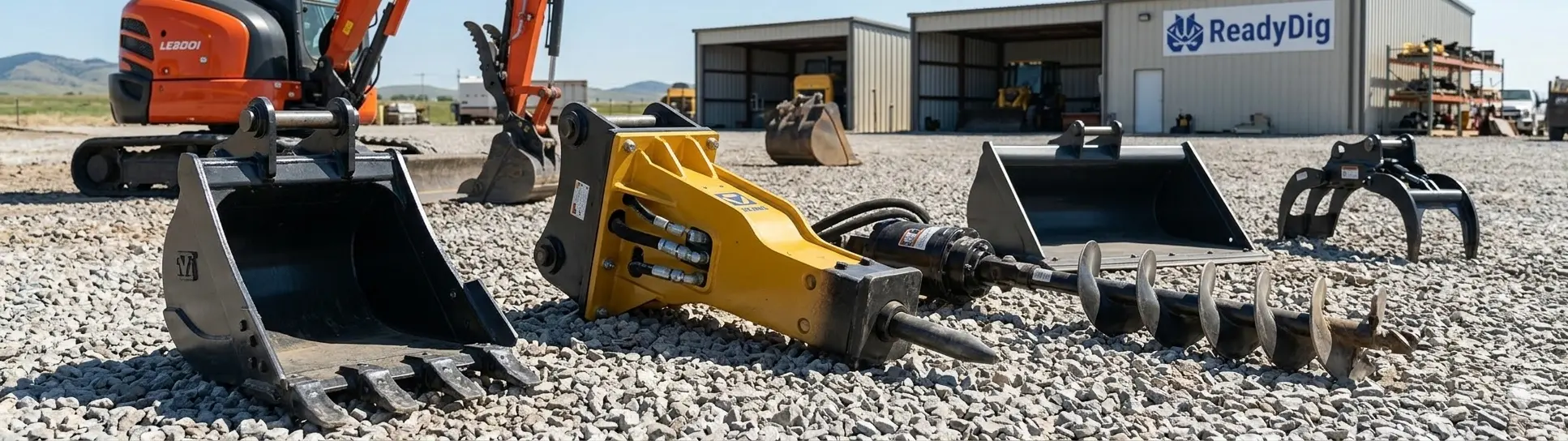
Mini Excavator Attachments: Expanding Versatility
You can multiply the ROI of your machine by utilizing different attachments from our ReadyDig inventory. A mini excavator is only as useful as what you put on the end of the stick.
Must-Have Attachments (Buckets, Augers, Breakers)
The standard digging bucket is essential, but you should also consider a smooth-edged grading bucket for finishing work and a narrow trenching bucket for utility lines. Earth augers attach to the hydraulics to drill perfect holes for fence posts or deck footings in seconds. Hydraulic breakers (or hammers) are necessary for shattering solid rock, asphalt, or concrete slabs.
Specialized Attachments (Grapples, Thumbs, Hydraulic Tilting)
A hydraulic thumb works with your bucket to pinch and grab irregular items like tree stumps, boulders, or demolition scrap. For heavy forestry or land clearing, dedicated grapples offer even more control. Hydraulic tilting mechanisms allow the operator to angle the bucket left or right without moving the machine, which is perfect for complex grading on uneven terrain.
Quick Coupler Systems for Fast Switching
Time is money on a job site. Modern mini excavators utilize quick coupler systems that allow operators to drop a bucket and attach a breaker in a matter of minutes. This keeps the project moving and eliminates the need to manually hammer out stiff mounting pins.
Choosing the Right Mini Excavator for Your Project (Buyer’s Guide)
Calculating Necessary Digging Depth and Reach
Do not rent or buy a machine based purely on how it looks. You must know your project specs. If you are digging a 10-foot utility line, a 1.5-ton machine with a maximum dig depth of 7 feet will leave you stranded. Always review the spec sheet to ensure the machine’s maximum digging depth and horizontal reach comfortably exceed your project requirements.
Matching Horsepower to Material Density
Digging through loose sandy loam requires far less breakout force than carving through compacted clay or rocky soil. If you are working in tough, dense earth, you need to step up to a higher weight class with greater engine horsepower and superior hydraulic breakout force to prevent stalling the boom.
Tracks vs. Wheels: Selecting the Right Undercarriage
While the vast majority of mini excavators run on rubber tracks for low ground pressure and high traction in mud, wheeled compact excavators do exist. Wheeled models are better suited for urban environments where the machine needs to drive quickly across paved roads between work zones without damaging the asphalt.
Cost Analysis: Buying vs. Renting Comparison
Factors that Determine Rental Costs
Renting a mini excavator is a highly cost-effective strategy for short-term projects. Rental costs depend on the machine’s weight class, the attachments required, delivery fees, and the rental duration (daily, weekly, or monthly). Renting also frees you from maintenance liabilities and long-term storage requirements.
When Does Ownership Become Cost-Effective?
If you are a contractor consistently renting equipment, you need to calculate your utilization rate. The general industry threshold suggests that if you are using a mini excavator for more than 150 to 200 hours per year, or renting it for more than three months annually, purchasing a new or used machine becomes more financially viable. Buying builds equity in the asset and allows you to capitalize on tax depreciation benefits.
Operating and Maintenance: Longevity and Efficiency
Essential Maintenance Checks and Schedule
Maintaining a mini excavator requires strict discipline. Every shift must begin with a daily walk-around inspection to check engine oil, hydraulic fluid levels, and track tension. Operators must grease all pivot pins daily to prevent metal-on-metal wear. Adhering to these OEM schedules ensures your machine stays protected under the ReadyDig Uptime Guarantee™.
Understanding Operating Costs (Fuel, Insurance, Depreciation)
When calculating your hourly rate to bill clients, you must factor in the total operating costs of the mini excavator. This goes beyond just the monthly loan payment. You need to account for diesel fuel consumption, heavy equipment insurance premiums, scheduled fluid replacements, wear parts (like rubber tracks and bucket teeth), and the machine’s overall depreciation.
Safety Regulations and Required Operator Training
Operating a mini excavator safely requires specific knowledge. While smaller machines are accessible, operators must be trained to navigate slopes safely, understand trench collapse risks, and locate underground utilities before digging (always call 811 before you dig). Familiarizing yourself with the machine’s load charts and safety lockouts is mandatory to prevent tipping accidents.
Frequently Asked Questions
How much can a mini excavator lift?
Depending on the model and size, mini excavators typically have a maximum lifting capacity ranging from 1,000 pounds for the smallest units up to 10,000 pounds or more for the largest compact models when properly stabilized.
What are the key benefits of using a mini excavator over a full-sized machine?
Mini excavators offer superior maneuverability in tight or confined spaces, are easier and cheaper to transport, cause less damage to ground surfaces, and are more fuel-efficient than their full-sized counterparts.
What is the average lifespan of a mini excavator?
The standard life expectancy for a mini excavator is measured in operating hours, usually ranging from 7,000 to 10,000 hours, depending on maintenance quality and application intensity.
What is the primary weight class definition for a mini excavator?
Mini excavators are defined as having an operating weight generally falling between 0.7 metric tons (1,500 pounds) and 8.5 metric tons (18,700 pounds).
Can mini excavators perform demolition work?
Yes, mini excavators are often used for small-scale demolition projects. When equipped with specialized attachments like hydraulic hammers or breakers, they are effective for breaking up concrete, asphalt, and demolishing small structures like sheds or fences.
What does ‘Zero Tail Swing’ mean on a mini excavator?
Zero Tail Swing (ZTS) refers to a design where the counterweight does not extend beyond the width of the tracks when the machine’s cab is rotating. This allows the machine to work right next to walls or obstacles without hitting them.
What attachments are commonly used with a mini excavator?
Common attachments include various buckets (trenching, ditching), augers (for drilling holes), hydraulic hammers/breakers, grapples/thumbs (for material handling), and compactor plates.
Are mini excavators difficult to transport between job sites?
No, one of their main advantages is ease of transport. Most mini excavators can be towed using a standard trailer and a ¾-ton pickup truck, significantly reducing transportation logistics and costs compared to large machinery.