
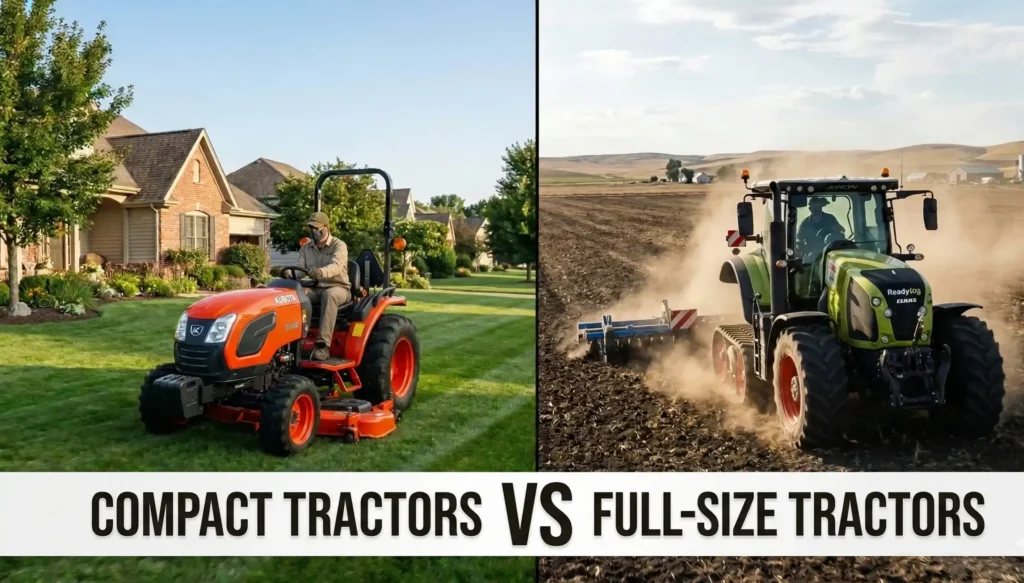
Whether you are a hobby farmer managing a few acres or an agricultural professional overseeing a massive operation, investing in a tractor is a major decision. The dominant question most buyers face is simple but critical: do I need a compact tractor or a full-size utility model?
Making the wrong choice can lead to thousands of dollars wasted on unnecessary power, or conversely, a machine that is dangerously underpowered for your daily tasks. In this guide, we break down everything you need to know, from acreage charts and lifting capacities to hidden costs like insurance, attachment pricing, and fuel consumption.
Understanding the Basics: Tractor Size Classifications
What is a Compact Tractor?
Compact tractors are highly versatile, smaller-framed machines typically ranging from 20 to 60 horsepower (HP). Designed primarily for residential use, hobby farms, and light landscaping, they bridge the gap between a standard riding lawnmower and a heavy-duty farm tractor. Compact models, like the Kioti CK and DK series, are built to accommodate a variety of front-end loaders and three-point hitch implements, making them the ultimate multi-tool for small landowners.
What is a Full-Size (Utility) Tractor?
Full-size utility and agricultural tractors are the heavy lifters of the farming world. Ranging from 60 HP to well over 300+ HP, like the massive Claas Xerion and Axion models, these machines feature heavy steel chassis, wider wheelbases, and immense torque. They are engineered for continuous, grueling labor such as deep tillage, pulling large balers, broadacre planting, and commercial material handling.
Head-to-Head Comparison: Which Tractor Do You Need?
Property Size and Acreage Guide (1-10 acres vs. 50+ acres)
The size of your property is often the easiest way to determine the size of the tractor you need. Using a 300 HP machine on two acres is overkill, while a 25 HP compact tractor will struggle to maintain 100 acres.
- 1 to 10 Acres: A compact tractor (20-40 HP) is ideal. It is perfect for mowing, moving mulch, snow removal, and light tilling.
- 10 to 50 Acres: A large compact or mid-size utility tractor (40-75 HP) offers the PTO power required for larger brush hogs and heavier loader work.
- 50+ Acres: A full-size utility or heavy agriculture tractor (80+ HP) is necessary for pulling large seeders, heavy-duty hay equipment, and managing commercial yields.
Power, PTO, and Lifting Capacity Differences
Horsepower dictates what a tractor can pull, but PTO (Power Take-Off) horsepower determines what implements it can run. Compact tractors typically offer PTO HP in the 15-45 range, which is plenty for a 5-foot rotary cutter. Full-size tractors boast robust PTO output and massive hydraulic flow rates, allowing them to lift thousands of pounds and run heavy, continuous-use implements without overheating.
Maneuverability vs. Heavy-Duty Stability
Compact tractors shine in tight spaces. If you need to navigate around barns, weave through orchards, or work close to fences, a compact machine is superior. Full-size tractors lack this agility but make up for it in heavy-duty stability. Their weight and wide stance give them the necessary traction to pull heavy loads through deep mud without excessive wheel slip.
Financial Breakdown: Costs Beyond the Sticker Price
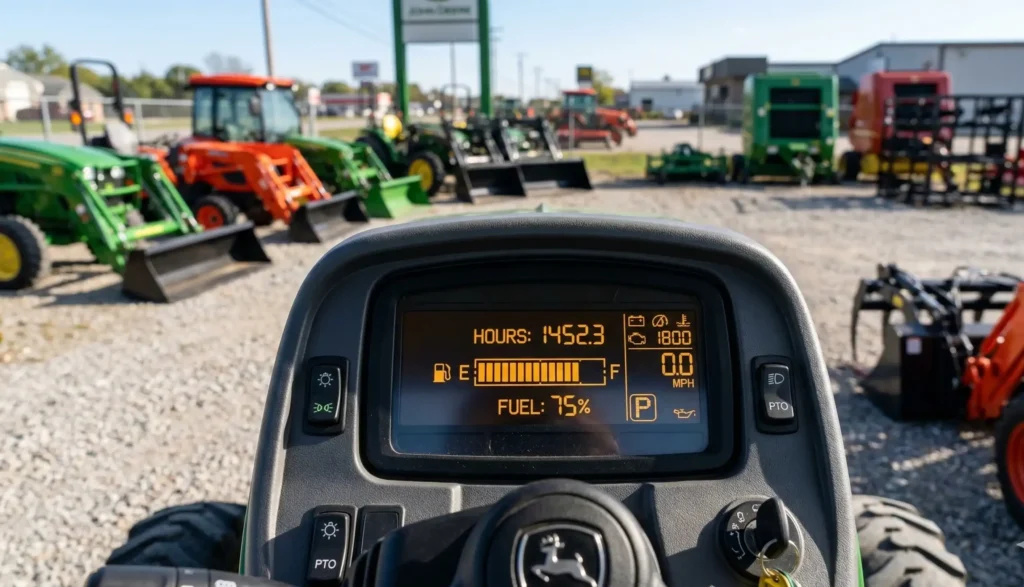
Upfront Purchase Prices & Financing Options
A new compact tractor can range from $15,000 to $35,000, while a full-size agriculture tractor easily starts at $60,000 and can exceed $300,000. When it comes to financing, buyers of compact tractors can often utilize standard personal or small equipment loans. Full-size tractors, however, usually qualify for specialized agricultural commercial financing, which may offer different tax depreciation benefits for registered farm businesses.
Attachment and Implement Costs
A major hidden cost disparity lies in the implements. Attachments for compact tractors are lighter, use less steel, and are widely available, making them relatively affordable. Conversely, commercial-grade implements for full-size tractors, like 15-foot batwing mowers or large round balers, can cost as much as a compact tractor itself.
Fuel Efficiency Metrics and Maintenance Costs
Compact tractors are incredibly fuel-efficient, often burning less than 1 to 1.5 gallons of diesel per hour under moderate load. Full-size tractors, depending on the horsepower and the task, can consume anywhere from 4 to 10+ gallons per hour. Additionally, routine maintenance on full-size equipment requires larger volumes of hydraulic fluid, massive, expensive tires, and specialized mechanic labor.
Depreciation and Resale Value
Both classes of tractors hold their value remarkably well compared to standard vehicles. However, compact tractors tend to have a larger secondary market (hobby farmers, homeowners), which keeps their resale value highly competitive. Full-size machines depreciate more heavily in their first few years but stabilize over time, which is why buying from certified used agriculture inventories is a highly cost-effective strategy.
Top Tractor Brands to Consider
Kubota and John Deere
These two legacy brands dominate both markets. Kubota is globally renowned for its incredibly reliable compact lines and smooth hydrostatic transmissions. John Deere remains a powerhouse across all sizes, offering premium operator comfort and an extensive dealer network.
Claas, Kioti, and Other Top Competitors
If you are looking for alternatives that offer incredible value and heavy-duty build quality, brands like Kioti are exceptional. Kioti’s compact and mid-size models offer heavier operating weights than many competitors, improving traction. For full-size, commercial farming, Claas produces some of the most technologically advanced and powerful draft tractors on the market today.
Safety, Storage, and Licensing Considerations
ROPS, Stability, and Terrain Management
Rollover risks are a serious consideration. Compact tractors have a narrower wheelbase, making them more susceptible to tipping on steep inclines if not properly ballasted. Always ensure the ROPS (Roll-Over Protective Structure) is deployed. Full-size tractors offer superior stability on varied terrain due to their immense weight and width.
Garage Storage vs. Barn Storage
A major benefit of a compact tractor is that models with folding ROPS can often fit inside a standard residential two-car garage. A full-size tractor will require a dedicated pole barn or large equipment shed to protect it from the elements.
Insurance and Licensing Requirements
Compact tractors rarely require special licensing and can often be covered under a standard or slightly modified homeowner’s insurance policy. Full-size tractors driven on public roads between fields may require slow-moving vehicle signage, specific lighting configurations, and dedicated commercial farm equipment insurance.
Why Buy Your Next Tractor from ReadyDig?
Uptime Guaranteed.™
Always Ready to Dig. Guaranteed.™
Whether you’re pushing snow with a compact tractor or deep-tilling 500 acres with a full-size rig, we know that downtime is a drag. Downtime is NOT free. Every hour a machine is down is an hour your project gets delayed, increasing costs and sending productivity down the drain.
ReadyDig knows downtime is NOT an option. We back our machines with our Uptime Guarantee™ to keep your fleet ready for work with little to no disruptive downtime. Simply put, it comes down to these two commitments:
- Rapid Response: We’ll be at your job site within 24 hours of getting your call to get your machine fixed and ready to dig.
- Loaner Machine: Get a loaner machine, from us to you, within 72 hours if the problem hasn’t been fixed to cut the downtime.
Simply put, it’s all about keeping your machine Always Ready to Dig.™
*Terms and Conditions Apply! Please ask your rep.
Frequently Asked Questions (FAQs)
What is the main difference between a compact and a full-size tractor?
Compact tractors (20-60 HP) are smaller, highly maneuverable machines designed for residential use, hobby farms, and light landscaping. Full-size tractors (60-100+ HP) feature larger frames, higher horsepower, and greater lifting capacities built for heavy-duty, large-scale agriculture.
What size tractor do I need for 10 acres?
For a 10-acre property, a compact tractor ranging from 25 to 50 horsepower is usually ideal. It provides enough power for mowing, tilling, and loader work without the excessive cost and bulk of a full-size utility tractor.
Are compact tractors worth the money?
Yes, compact tractors offer exceptional value for small-scale operations. They are cost-effective solutions for mowing, snow clearing, and light landscaping, while also boasting lower maintenance and fuel costs compared to full-size models.
Can a compact tractor handle heavy-duty tasks?
While compact tractors can manage lighter heavy-duty tasks with the proper attachments, they are not designed for intense operations like deep tilling, pulling large round bales, or broadacre harvesting. Those tasks require a full-size tractor.
How much does a compact tractor typically cost?
The cost of a new compact tractor typically ranges from $15,000 to $35,000, depending on the brand, horsepower, features (like a cab vs. open station), and included attachments.
Which brand is better: Kubota or John Deere?
Both are premium, highly reliable brands. Kubota is widely praised for its durability and is often slightly more cost-effective for compact models, while John Deere has a legendary reputation for premium features and powerful engines across both compact and full-size categories.
Are utility tractors more expensive to maintain?
Yes, utility and full-size tractors are generally more expensive to maintain. They have larger engines, complex hydraulic systems, take significantly more fluids during changes, and require more expensive parts.
What kind of attachments can I put on a compact tractor?
Compact tractors are highly versatile and can be fitted with a wide variety of attachments, including front-end loaders, backhoes, mower decks, small tillers, box blades, and snow blowers.