
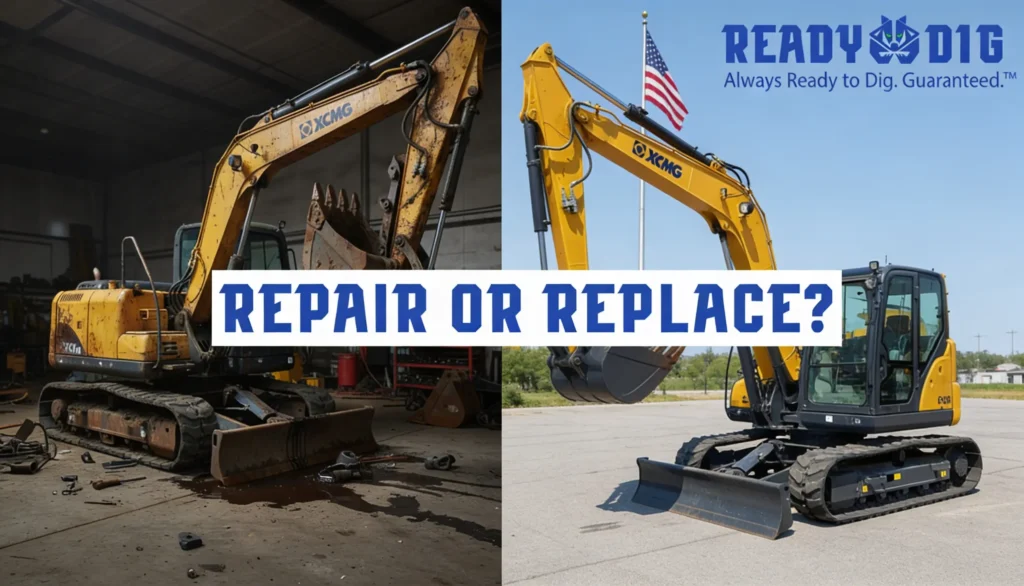
Knowing exactly when to retire heavy equipment is one of the most difficult financial decisions a contractor must make. Hold onto a machine too long, and you will bleed capital through catastrophic repairs and lost contracts. Replace it too early, and you sacrifice valuable equity. Figuring out when to replace your mini excavator requires looking past the daily grind and conducting a harsh evaluation of your fleet.
At ReadyDig, we believe your equipment should build your business, not drain your bank account. The decision to upgrade comes down to five diagnostic categories: Financial, Mechanical, Operational, Safety, and Technology. When these factors begin to drag down your Total Cost of Ownership (TCO), it is time to take action. In this guide, we will break down the undeniable signs that your old machine is costing you more than it is worth, helping you confidently make the choice to upgrade so you are always Ready. Set. Dig.
Sign 1: When Mechanical Issues Become Catastrophic
Minor wear and tear is expected in the earthmoving industry. However, there is a distinct line between routine maintenance and catastrophic mechanical failure.
Failing Hydraulics and Excessive Smoke
Your mini excavator is essentially a massive hydraulic pump on tracks. If you are constantly replacing blown hoses, topping off fluid, or dealing with overheating cylinders, the internal seals of your main hydraulic system are deteriorating. Similarly, if the exhaust is constantly blowing thick black or blue smoke, your engine is burning oil and losing compression. These are not quick fixes. They are signs of systemic failure that require complete rebuilds.
The Cost of Engine Repower vs. Depreciation
When a diesel engine fails, you face a massive bill. An engine repower (replacing the old engine with a new one) can easily cost thousands of dollars. You must compare this repair quote against the rapidly depreciating value of the machine. Dropping a $10,000 engine into a machine that is only worth $15,000 at auction is a terrible financial move. Instead, that money serves better as a down payment on certified used heavy equipment.
Persistent Undercarriage Problems and Track Wear
The undercarriage makes up a massive portion of a machine’s total value. If you have already replaced the sprockets, idlers, and rubber tracks multiple times, and the machine still suffers from track derailment or grinding noises, the core frame may be warped or severely worn. At this stage, fixing the undercarriage is simply throwing good money after bad.
Sign 2: Declining Operational Efficiency and Downtime
A machine that runs but cannot perform efficiently is quietly stealing your profit margins.
Loss of Digging Force and Cycle Time Increase
Operators know exactly how their machine should feel. If the bucket struggles to break through compacted clay that it used to handle easily, or if lifting a heavy load feels sluggish, the hydraulic pressure is compromised. This increases your cycle times. An extra five seconds per scoop adds up to hours of wasted labor over a week. If you are choosing the right excavator size for a job but it still lacks power, the machine itself is failing.
Excessive Fuel Consumption and EPA Compliance Issues
Older engines are notoriously inefficient. Over time, worn fuel injectors and clogged particulate filters cause the machine to guzzle diesel. Furthermore, older machines may no longer meet modern EPA emission standards. Upgrading to a newer model with a Tier 4 Final engine drastically reduces your daily fuel costs while keeping you compliant on government and municipal job sites.
Understanding the Lost Revenue of Downtime
Downtime is the silent killer of construction companies. When a machine breaks down, you are not just paying the mechanic. You are paying a crew to stand around doing nothing, you are delaying the project schedule, and you are risking your reputation with the client. If your machine’s reliability is unpredictable, the lost revenue from downtime quickly justifies purchasing a new machine backed by the ReadyDig Uptime Guarantee™.
Sign 3: Safety Risks and Operator Welfare
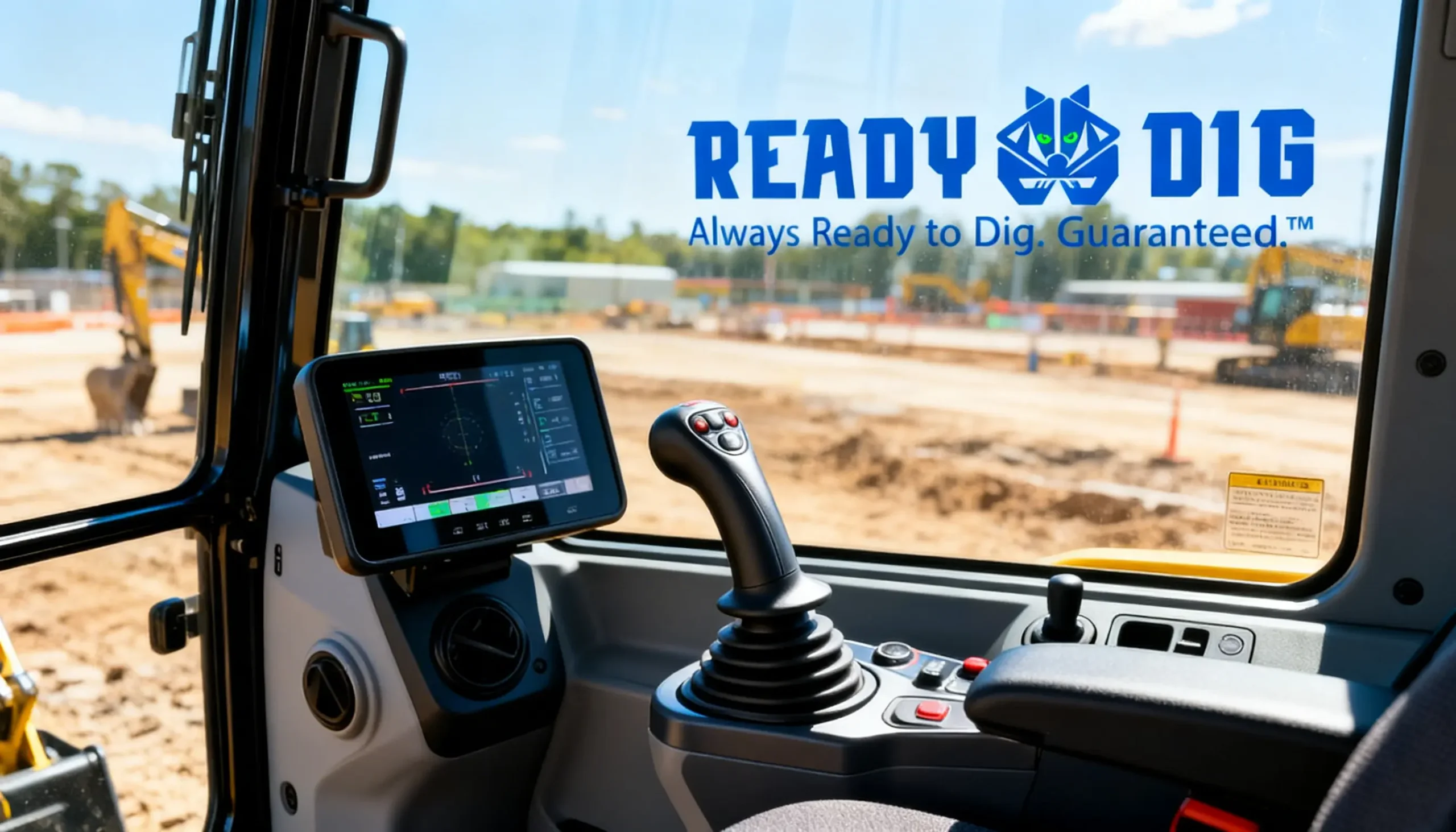
Your operators are your most valuable asset. Putting them in an unsafe or severely outdated machine is a liability you cannot afford.
Failures in ROPs/FOPS, Backup Alarms, and Controls
Safety features degrade over time. If the Roll-Over Protective Structure (ROPS) or Falling Object Protective Structure (FOPS) is rusted, dented, or structurally compromised, the machine is completely unsafe to operate. Failing backup alarms, unpredictable swing brakes, and jerky, unresponsive joysticks create a dangerous environment for ground workers. New machines offer smooth, electro-hydraulic controls that prevent accidents.
Lack of Modern Telematics and Geo-Fencing Features
Modern fleet management relies on data. Older machines lack telematics systems that transmit GPS location, idle time, and automated maintenance alerts. Without this technology, you are managing your fleet blindly. Upgrading gives you access to geo-fencing (preventing theft) and remote diagnostics, ensuring you can track daily maintenance checks effortlessly.
Sign 4: The TCO Formula Flips: Financial Strain
To make a logical business decision, you must remove emotion and look strictly at the Total Cost of Ownership (TCO).
Calculating Total Cost of Ownership (TCO) Threshold
TCO includes the initial purchase price, financing interest, insurance, fuel, maintenance, parts, and eventual resale value. As a machine ages past 5,000 hours, maintenance costs skyrocket. When your projected annual maintenance budget begins to equal the annual loan payments of a brand-new machine, the TCO formula has flipped. You are now paying “new machine” prices for an old, unreliable asset.
The Repair Estimate vs. Trade-In Value Comparison
Industry experts recommend the 50 percent rule. If your mechanic hands you a repair quote that exceeds 50 percent of the machine’s current fair market value, do not authorize the repair. Instead, take whatever trade-in value you can get and put it toward an upgrade. You can read more about evaluating assets in our guide on how to choose the best equipment for sale.
Accounting for Insurance, Labor, and Parts Availability
Do not forget the hidden costs. Aging machines are harder to find parts for. If your local dealer no longer stocks the necessary OEM parts, you will spend days waiting for shipping. Additionally, commercial insurance premiums are often lower for new machines equipped with modern safety features and anti-theft GPS tracking.
Sign 5: Outdated Technology and Competitive Disadvantage
Sometimes, a machine runs perfectly fine, but it is so technologically obsolete that it prevents you from bidding on complex jobs.
The Value of Zero Tail Swing and Modern Operator Comfort
If your fleet only consists of conventional tail swing excavators, you are losing residential jobs to competitors with Zero Tail Swing (ZTS) models. A ZTS machine allows the operator to dig right up against foundations and fences without swinging the counterweight into a wall. Furthermore, modern cabs offer climate control, Bluetooth radios, and ergonomic seating, which helps you retain top-tier operators.
How Electric and Hybrid Models Impact Fleet Future
The industry is changing. Indoor demolition projects, hospitals, and green-certified urban developments increasingly require zero-emission equipment. If your current diesel machine is locking you out of these lucrative contracts, it is time to look at the future of what a mini excavator can do by upgrading to a modern, eco-friendly unit.
Next Steps: Smart Replacement Planning
If you have recognized two or more of these signs in your current equipment, it is time to start planning your exit strategy.
Maximizing Trade-In Value and Disposal
Do not wait until the machine is completely dead to sell it. A running machine with high hours still holds trade-in value for dealers looking for auction units or scrap parts. Clean the machine, gather your complete maintenance logs, and get a professional appraisal.
Financing Options for New Equipment Acquisitions
Replacing a machine does not have to drain your operating capital. Whether you are weighing heavy equipment rental vs. buy options, or looking for flexible financing on a new purchase, ReadyDig has you covered. We offer aggressive trade-in allowances and low-interest financing to get you into a reliable machine today. Contact our sales team and let’s get you back to work.
Frequently Asked Questions
What is the maximum operating hour lifespan before a mini excavator should be replaced?
The standard life expectancy for a mini excavator is typically measured between 7,000 and 10,000 operating hours, though diligent maintenance can extend its useful life.
How does poor maintenance affect the Total Cost of Ownership (TCO)?
Poor maintenance significantly increases TCO by leading to catastrophic failures, stabilizing operating budgets poorly, and drastically reducing the machine’s resale value, potentially resulting in over $150,000 in lost value compared to diligent maintenance.
What are the biggest mechanical red flags indicating I should replace the machine?
Major red flags include excessive engine smoke, persistent hydraulic overheating or leaks, and continuous failure of undercarriage components despite frequent repairs.
When is it better financially to replace an excavator rather than repair it?
Generally, if the total cost of a major repair (like an engine rebuild or full hydraulic system replacement) exceeds 50% of the machine’s current market value, replacement is typically the more strategic and cost-effective decision.
Do new safety features, like telematics, justify replacing an older machine?
Yes, replacing an older machine may be justified by new technology like telematics, which allows for remote diagnostics and performance tracking, and adherence to modern safety standards like updated ROPs/FOPS structures.
How does excessive fuel burn compare to a repair cost when calculating replacement timing?
Excessive fuel burn acts as a constantly rising hidden cost. Over time, the difference in fuel efficiency between an old engine and a new, optimized engine can quickly surpass the cost of major repairs, making replacement a necessary efficiency upgrade.
What key information should I review in my maintenance records to confirm it’s time to replace?
You should review maintenance logs quarterly to identify recurring component failures and assess reliability trends, helping you justify the capital expenditure for replacement.
What is the benefit of replacing an older machine with a Zero Tail Swing model?
Zero Tail Swing (ZTS) allows the counterweight to remain within the width of the tracks during rotation, greatly improving safety and maneuverability in tight urban construction or residential job sites.